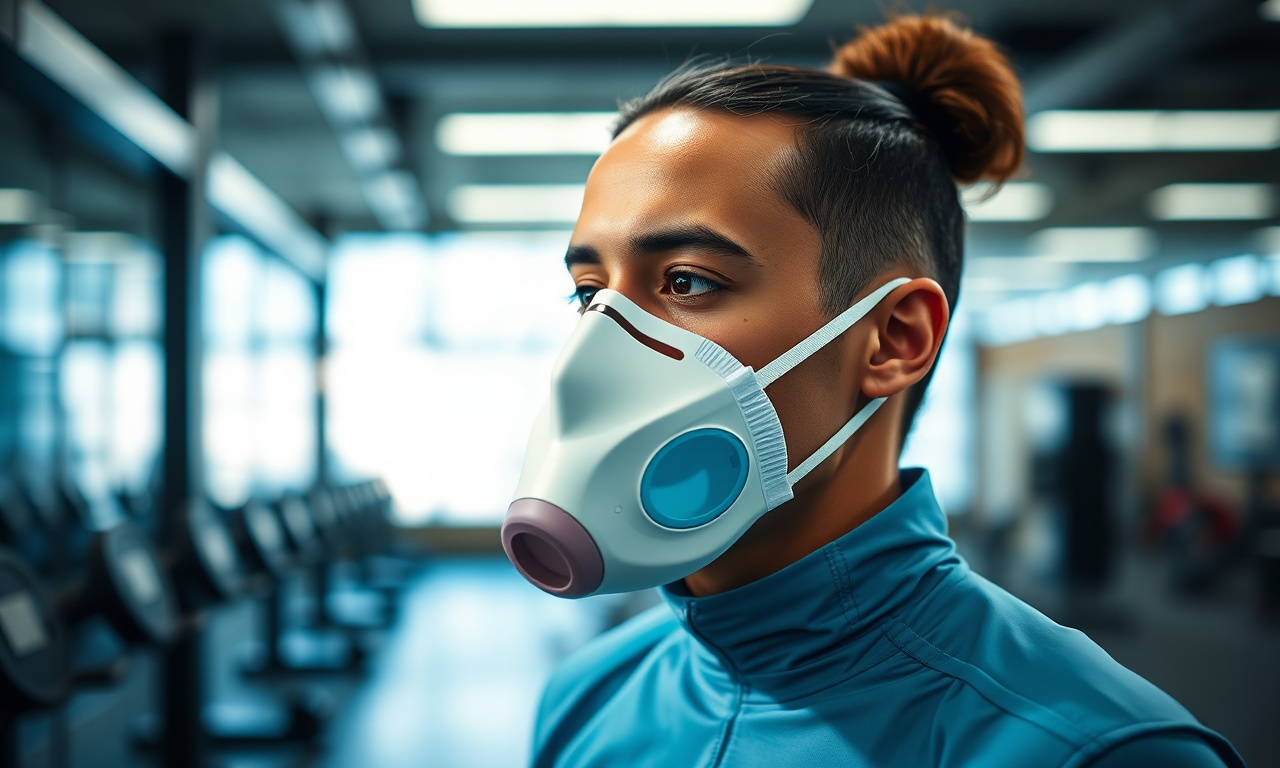
Metabolic analysis startup PNOĒ is preparing to roll out a self-administered version of its breath-testing hardware, aiming to bring lab-level fitness and metabolic data directly to consumers without requiring specialized staff, TechCrunch reported.
Scheduled to debut on October 1, the PNOĒ 2.0 streamlines cardiopulmonary assessment into an eight-minute automated test. Rather than depending on an on-site technician to administer diagnostics, users can put on the device, press a single activation button, and breathe normally while seated. The hardware tracks oxygen intake and carbon dioxide output to deliver tailored guidance covering exercise routines, nutrition, and longevity.
Transforming Lab-Grade Diagnostics into Self-Service Tech
Founded by Chief Executive Officer Apostolos Atsalakis and Chief Product Officer Panos Papadiamantis, the Malden, Massachusetts-based startup operates research and development out of Athens, Greece. The core science of indirect calorimetry—evaluating respiratory gases to determine how the body metabolizes fuel—has been established for over a century. However, clinical metabolic carts have historically remained confined to hospitals, academic laboratories, and elite athletic facilities due to their bulky footprint, high price tags, and operational complexity.
PNOĒ aims to make those capabilities accessible by capturing 23 physiological biomarkers within a compact profile. In addition to VO₂ max, widely considered a primary benchmark of cardiorespiratory health and physical endurance, the system tracks resting metabolic rate and metabolic flexibility, which quantifies how efficiently a person transitions between metabolizing fats and carbohydrates. Atsalakis noted that these respiratory metrics provide specific answers regarding calorie expenditure and training zones that standard blood panels cannot reveal.
To develop the new iteration, PNOĒ partnered with Milan-based Design Group Italia. Beyond shrinking the overall size and reducing the component count to boost durability, the engineering team introduced a modular architecture to address hygiene concerns. The internal electronic sensors detach entirely from the outer silicone mask and securing straps, enabling commercial facilities to share the expensive core hardware across multiple users while clients maintain their own personal silicone facepieces.
Commercial Traction and the Wellness Boom
PNOĒ operates strictly on a business-to-business model, supplying hardware, software, marketing assets, and instructional support on a subscription tier priced between $400 and upwards of $1,000 per month. The platform also enables commercial operators to connect diagnostic outputs directly to their own commercial services, such as personal training or specialized recovery regimens.
The company has secured high-profile enterprise partners, including Equinox fitness clubs, Four Seasons properties, Red Bull, the NBA, the Mount Sinai Health System, and wellness provider Restore Hyper Wellness. Approximately 85 percent of the company's client base is situated in the United States, alongside ongoing international expansions across Europe, Latin America, and Asia.
Originating from Atsalakis's doctoral sensing research at the University of Cambridge and later refined through Y Combinator’s Winter 2019 accelerator cohort, PNOĒ has raised roughly $22 million to date, including a recent $11 million round backed by venture firm 50 Years and Google Maps co-founder Lars Rasmussen. The 110-person enterprise has recently achieved profitability, is expanding at over 100 percent annually, and plans to pursue a Series B round within the next 12 months.
Despite its diagnostic ambitions, the company explicitly positions the unit as a wellness tool rather than a medical diagnostic device, comparing its regulatory standing to that of a body-composition scale. The hardware is not cleared by the U.S. Food and Drug Administration, meaning it cannot provide clinical diagnoses or prescriptions, though Atsalakis noted that long-term research into breath-based disease markers could eventually support future medical applications.
Why It Matters
PNOĒ's transition to an automated, self-operated format addresses the primary economic barrier that has kept gold-standard metabolic analysis out of mainstream health settings: human labor. By eliminating the necessity for certified exercise physiologists to administer each test, facilities such as unattended boutique gyms, independent training studios, and commercial retail pharmacies can realistically integrate high-tier physiological benchmarking into standard memberships.
This shift arrives at a time when the consumer health market is divided between two extremes. On one end are consumer wearables from companies like Garmin, Apple, and Whoop, which offer convenient but algorithmically estimated VO₂ max figures based on optical heart-rate metrics. On the other end are institutional metabolic carts that provide absolute precision but require prohibitive capital and administrative costs. PNOĒ 2.0 occupies a lucrative middle tier, delivering direct gas analysis without the clinical friction.
Furthermore, the move capitalizes on the mainstreaming of preventative health and longevity culture. As consumers increasingly view metrics like VO₂ max and metabolic flexibility as core indicators of long-term vitality, the demand for verifiable biological data will continue to surge. If automated breath analysis proves reliable in hands-off commercial environments, it could accelerate a broader trend where preventative physiological testing becomes as routine as stepping onto a gym scale.
Source: TechCrunch
Original source: https://techcrunch.com/2026/09/26/pnoes-new-face-mask-wants-to-make-lab-grade-breath-testing-a-self-serve-affair/